How to Assess Diamond Earring Quality for a Confident Purchase
What Makes Diamond Earrings Different from Rings
When people shop for diamond jewelry, they often carry the same expectations from a diamond engagement ring over to earrings. That approach can lead to confusion because earrings live a different life. They swing, catch light at changing angles, and sit farther from the eye than a ring does. The criteria that matter most shift accordingly. Understanding diamond earring quality means knowing which of the 4Cs to prioritise and where you can relax without losing beauty or value.
Diamond earrings are usually bought in pairs, so symmetry between the two stones becomes as important as the individual grades. A slight difference in colour or clarity that would be invisible in a single stone becomes noticeable when two sit side by side. Matching the diamonds well is one of the first signs of careful curation, and it directly affects how the earrings look on the ear.
What to Look for in Diamond Colour and Clarity
Colour in diamonds is graded from D (colourless) down to Z (light yellow or brown). For earrings, the setting and the metal play a big role in how colour is perceived. White gold or platinum settings tend to reflect any warmth in the stone, so a diamond that looks fine in a yellow gold setting may appear slightly tinted next to a bright white metal. A good rule of thumb is to choose a colour grade that complements the metal. For white metals, G to H colour is a practical sweet spot. For yellow gold, I to J colour often looks perfectly white because the metal masks the warmth.
Clarity relates to the tiny inclusions or blemishes inside a diamond. In earrings, the stone is rarely examined up close the way a ring is. A clarity grade of SI1 or SI2 usually looks clean to the naked eye once the diamond is set. The key is to check that no inclusion sits right under the table or near the edge where it might catch light in an obvious way. Eye-clean stones at these grades offer the best balance of appearance and cost.

Cut and Shape: How They Affect Sparkle
Cut is the one C that directly controls brilliance. A well-cut diamond reflects light back to the viewer, creating the sparkle that people notice across a room. For earrings, cut quality matters because the stones move. A diamond with a poor cut can look dull even if its colour and clarity are excellent. Round brilliant cuts are the most forgiving and the most popular for stud earrings because they maximise light return from any angle. Princess, cushion, and oval cuts also work well, but they may show more of their colour or inclusions if the cut proportions are off.
When choosing a shape, consider how the earring will sit on the ear. Fancy shapes like marquise or pear have a pointed end that can catch on hair or clothing. Round and square shapes tend to be more practical for everyday wear. The setting also matters. A bezel setting protects the edges of the diamond and gives a modern look, while a prong setting lets more light through the stone and creates a classic silhouette.
Carat Weight and Pairing
Carat weight in earrings is often discussed as total carat weight for the pair. A pair of 0.50 carat studs means each diamond is about half that size. The size that looks right depends on the wearer’s earlobe size and personal style. There is no universal ideal. What matters more than the exact carat number is that the two diamonds are closely matched in weight. A difference of even 0.05 carats can become visible when the stones are next to each other.
Matching goes beyond weight. The diamonds should also be close in colour and clarity grade so that one does not appear brighter or warmer than the other. Reputable sellers grade and sell earrings as matched pairs, meaning both stones fall within the same range for each C. This is one of the most practical aspects of diamond earring quality because a mismatched pair can look off even if each stone is fine on its own.
Settings and Backs That Keep Earrings Secure
An earring that falls out is a lost treasure. The setting holds the diamond, and the back keeps the earring on the ear. Common backs include push-backs, screw-backs, and friction backs. Push-backs are convenient but can loosen over time. Screw-backs offer more security because the post screws into the back, making it hard for the earring to come off accidentally. Friction backs use tension to stay put and are a good middle ground.
For larger or heavier earrings, a screw-back is the safer choice. For small studs, a quality friction back with a spring mechanism can be just as secure. The post itself should be thick enough to not bend. Most quality earrings use posts made of the same metal as the setting, usually 14k or 18k gold or platinum. Nickel-free alloys are important for people with sensitive skin.

How Piercing Style Affects Your Choice
Not all earrings are worn in the same piercing. The classic lobe piercing is the most common and accommodates almost any stud or drop earring. A second or third lobe piercing often calls for smaller studs because the space is tighter. Cartilage piercings, such as the helix or conch, require earrings with a longer post to account for the thicker tissue. Hoops and cuffs are options for those piercings, but studs with a screw-back are often the most comfortable for cartilage because they do not move around as much.
If you are buying earrings for an unhealed piercing, look for styles made from hypoallergenic materials like titanium or surgical steel. Once healed, gold and platinum are safe for most people. The back style also matters for healing piercings. Flat backs are easier to clean and less likely to irritate the skin than ball backs.
Metal Types and Their Practical Trade-Offs
The metal that holds the diamond affects both the look and the durability of the earrings. Platinum is strong and naturally white, but it is dense and expensive. 14k gold is a good balance of strength and affordability. 18k gold has a richer colour but is softer, so it may scratch more easily. White gold is often rhodium-plated to give it a bright white finish, and that plating wears off over time and needs reapplication. Yellow gold and rose gold do not require plating and keep their colour indefinitely.
For earrings that will be worn daily, 14k gold or platinum are the most practical choices. They resist bending and hold the diamond securely. Silver is less expensive but tarnishes and is too soft for holding precious stones over the long term. If budget is a concern, consider a smaller diamond in a higher-quality metal rather than the reverse.
Bringing It All Together
The best approach to diamond earring quality is to treat it as a set of trade-offs rather than a single score. A pair of earrings with G-H colour, SI1 clarity, and excellent cut in a 14k gold setting will outperform a pair with D colour, IF clarity, and a poor cut that sits in a cheap metal. The cut drives the sparkle, the colour and clarity should be matched between the two stones, and the metal should suit the wearer’s skin and lifestyle.
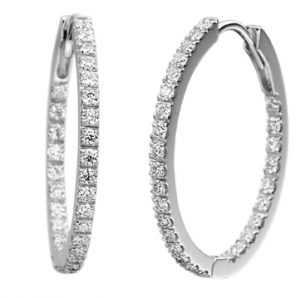
When you shop, ask for the grading report for each diamond if the stones are above half a carat. For smaller stones, a reputable jeweller’s assurance that the pair is matched is usually sufficient. Look at the earrings in natural light and under store lighting. Move them to see how they catch light from different directions. This is the moment when you can judge whether the pair looks balanced and beautiful to your eye.
Understanding diamond earring quality does not require a gemology degree. It requires knowing what to look for and what to let go. Focus on cut and matching, choose a secure back, pick a metal that works for daily wear, and trust your eye. A pair of well-chosen diamond earrings can be worn for decades, and the small effort you put into understanding the details will pay off every time you put them on.